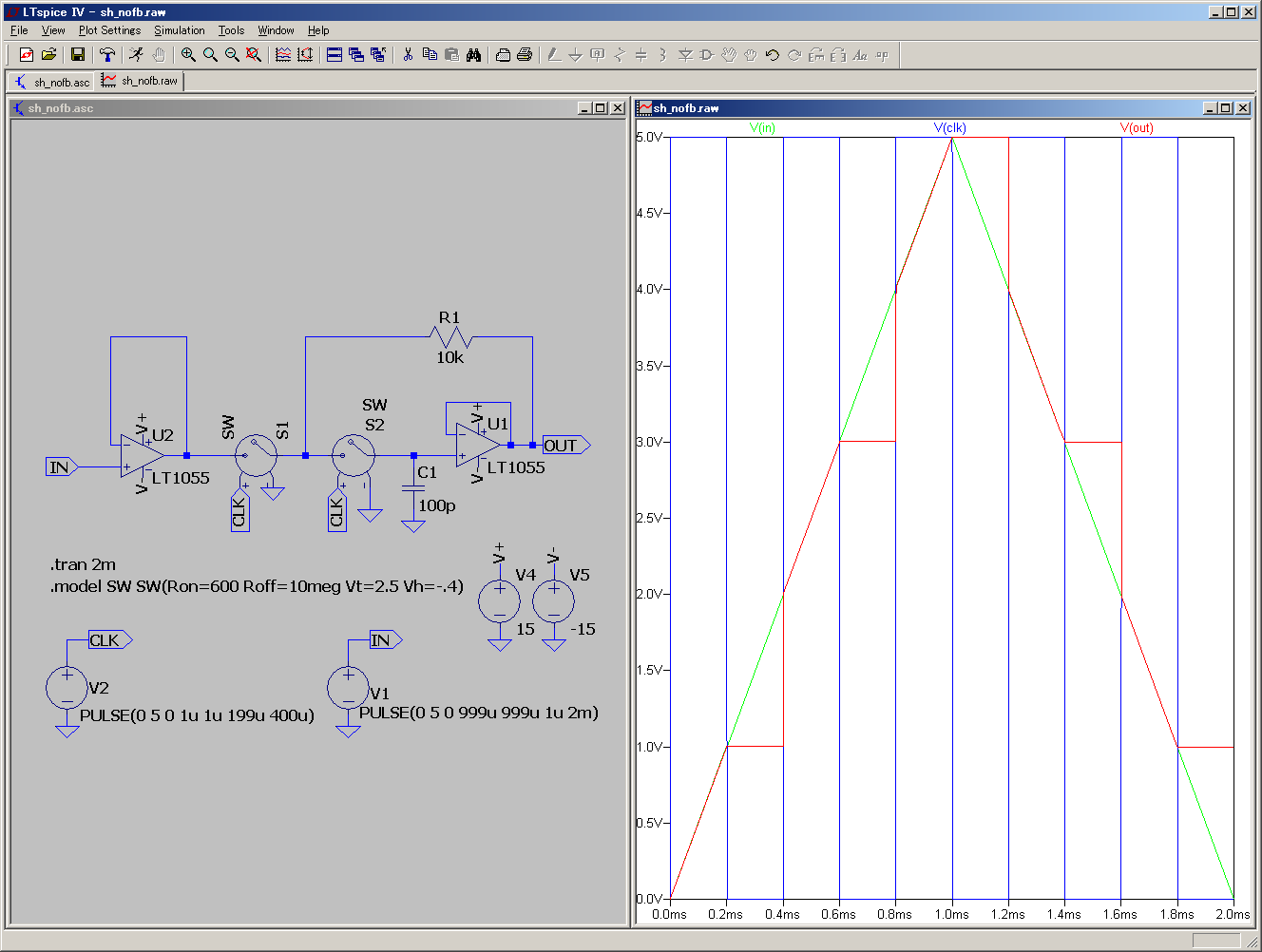
²»À¼¤ò´Þ¤á¤¿DAC¤Î½ÐÎÏÃʤä¥Õ¥£¥ë¥¿¤ÏÈæ³ÓŪÀ߷פ¬´Êñ¤Ê¤³¤È¤â¤¢¤Ã¤Æ¡¢ÍÍ¡¹¤Ê²óÏ©¤äÀ½ºîÎ㤬¸ø³«¤µ¤ì¤Æ¤¤¤ë¤¬¡¢ADC¤ÎÆþÎÏÃʤˤĤ¤¤Æ¤Ï¡¢ ¥ª¥Ú¥¢¥ó¥×¤ÎÁªÄê¤ò´Þ¤á¤¿À߷פ¬¤ä¤äÌÌÅݤǤ¢¤ë¤³¤È¤â¤¢¤ê¡¢DAC¤ËÈæ¤Ù¤ë¤È¤Þ¤È¤Þ¤Ã¤Æ¤¤¤ë¥µ¥¤¥È¤¬¾¯¤Ê¤¯¡¢¼ÂºÝ¤Ëư¤¯²óÏ©¤ÎÎ㤬¾¯¤Ê¤¤¤Î¤Ç¡¢¤¤¤¯¤Ä¤«¤Þ¤È¤á¤Æ¤ß¤ë¡£
Open-loop¥¿¥¤¥×¤Ï¡¢Ééµ¢´Ô¤Î¤³¤È¤ò¹Í¤¨¤ëɬÍפ¬¤Ê¤¤¤Î¤Ç¡¢¥µ¥ó¥×¥ë¥Û¡¼¥ë¥É²óÏ©¤ÎÃæ¤Ç¤Ï¡¢Èæ³ÓŪÀ߷פ¬ÍưפǤ¢¤ë¡£ ¥µ¥ó¥×¥ë¡¦¥Û¡¼¥ë¥É²óÏ©¤ÇÀµ¤·¤¤¥¹¥¤¥Ã¥Á¤ÎÁȤ߹ç¤ï¤»¤Ï¤É¤ì¡©¤«¤é¤ÎºîÎã¡£ ¥¹¥¤¥Ã¥Á¤ÎÅṲ̋òÊݤÄÄñ¹³¤Ï¤â¤È¤Î²óÏ©¤è¤ê¤â¤¦¾¯¤·¾®¤µ¤¤Êý¤¬Îɤ¤¤È»×¤ï¤ì¤ë¡£¥ª¥Ú¥¢¥ó¥×¤Ï¡¢ÆþÎÏÃÊ¡¦¥Û¡¼¥ë¥É²óÏ©¶¦¤Ë¥Ü¥ë¥Æ¡¼¥¸¥Õ¥©¥í¥ï¤¬²Äǽ¤ÊÉʼ郎ɬÍפǡ¢ ¥Û¡¼¥ë¥É²óÏ©¤Î¥ª¥Ú¥¢¥ó¥×¤Ï¡¢¤Ê¤ë¤Ù¤¯ÆþÎϥХ¤¥¢¥¹ÅÅή¤¬Ä㤤FETÆþÎÏÉʼïÅù¤òÁª¤Ö¡£
½éÃʤòLT1055¤Î¤Þ¤Þ¤Ë¤¹¤ë¾ì¹ç¤Ï¡¢¥²¥¤¥ó¤ò20dB¤Ë¤¹¤ë¤ÈLTSpice¾å¤Ïȯ¿¶¤·¤Ê¤¤¤¬¡¢¥ª¡¼¥Ð¡¼¥·¥å¡¼¥È¤¬¤ä¤äÂ礤¤¡£¥Û¡¼¥ë¥É»þ¤ÎÆþÎÏÃʤΥ¹¥¤¥Ã¥Á¤òºï½ü¤¹¤ë¤È¤µ¤é¤Ë¥ª¡¼¥Ð¡¼¥·¥å¡¼¥È¤ÏÂ礤¯¤Ê¤ë¡£ °ÌÁêÊä½þ¤È¤·¤Æ½éÃʤΥª¥Ú¥¢¥ó¥×½ÐÎϤÈȿžÆþÎÏü»Ò¤Î´Ö¤Ë100pFÄøÅ٤Υ³¥ó¥Ç¥ó¥µ¤òÄɲ乤ë¤È¥ª¡¼¥Ð¡¼¥·¥å¡¼¥È¤Ï²þÁ±¤¹¤ë¤¬¡¢¤¢¤Þ¤êÂ礤¤ÃͤÀ¤È¥µ¥ó¥×¥ë¤¬Äɿ路¤Ê¤¤¡£
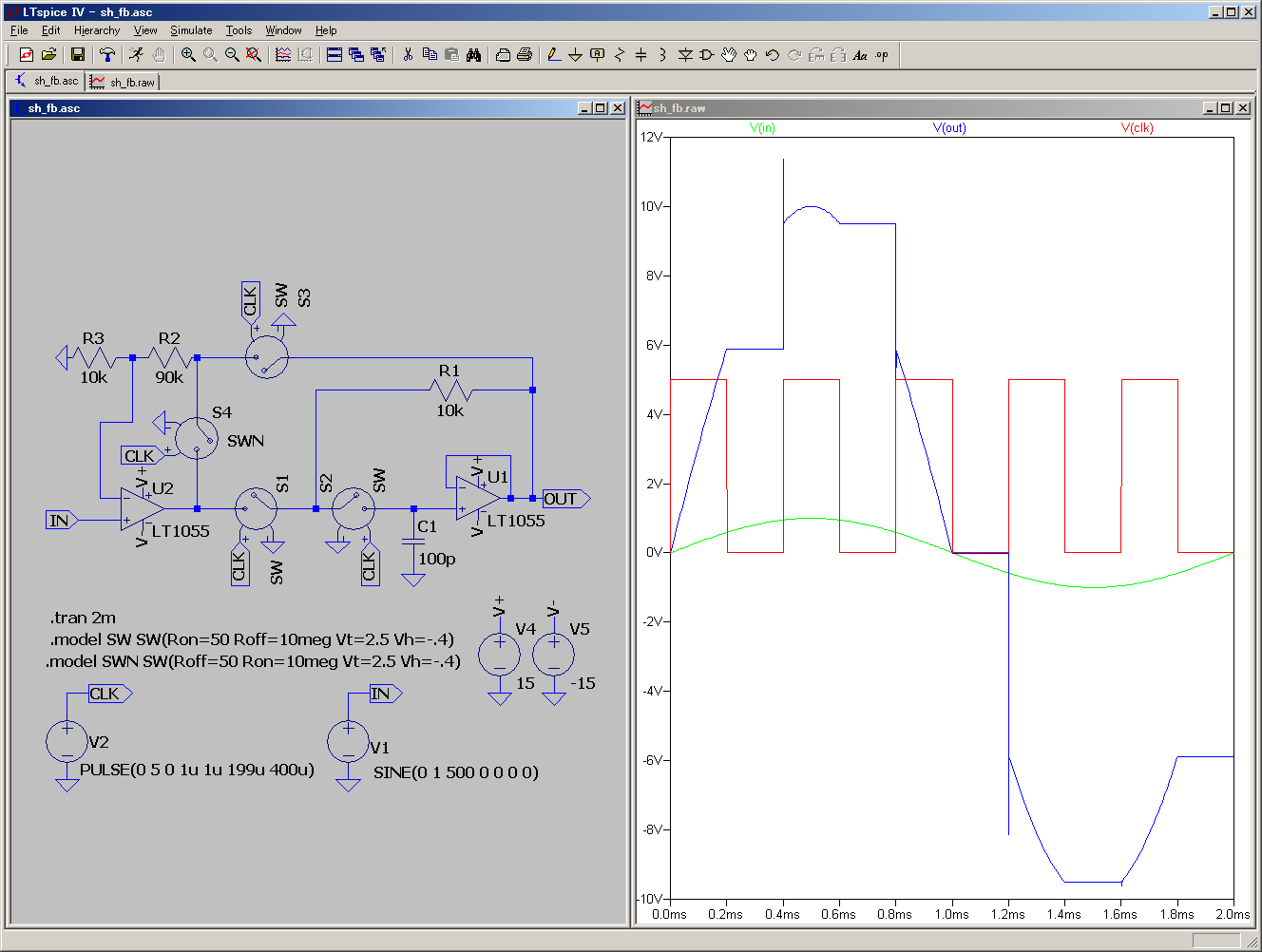
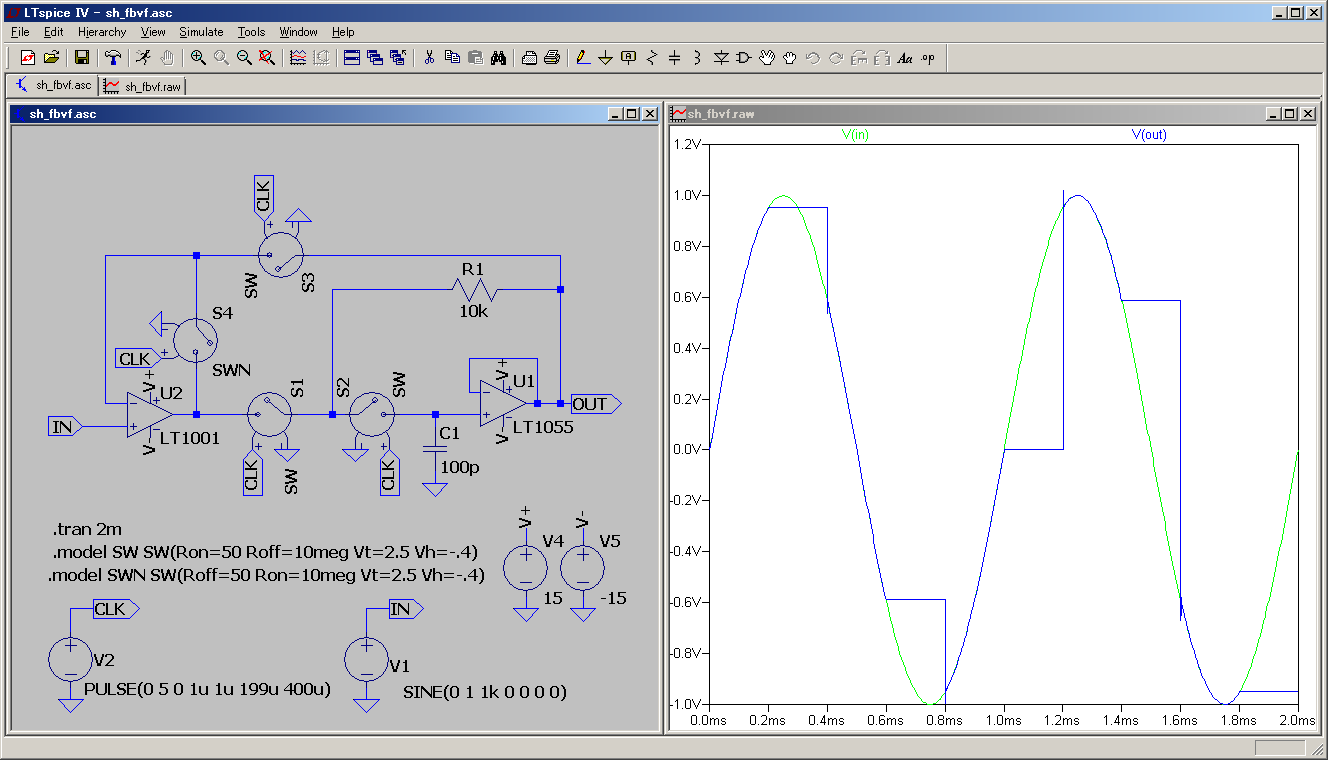
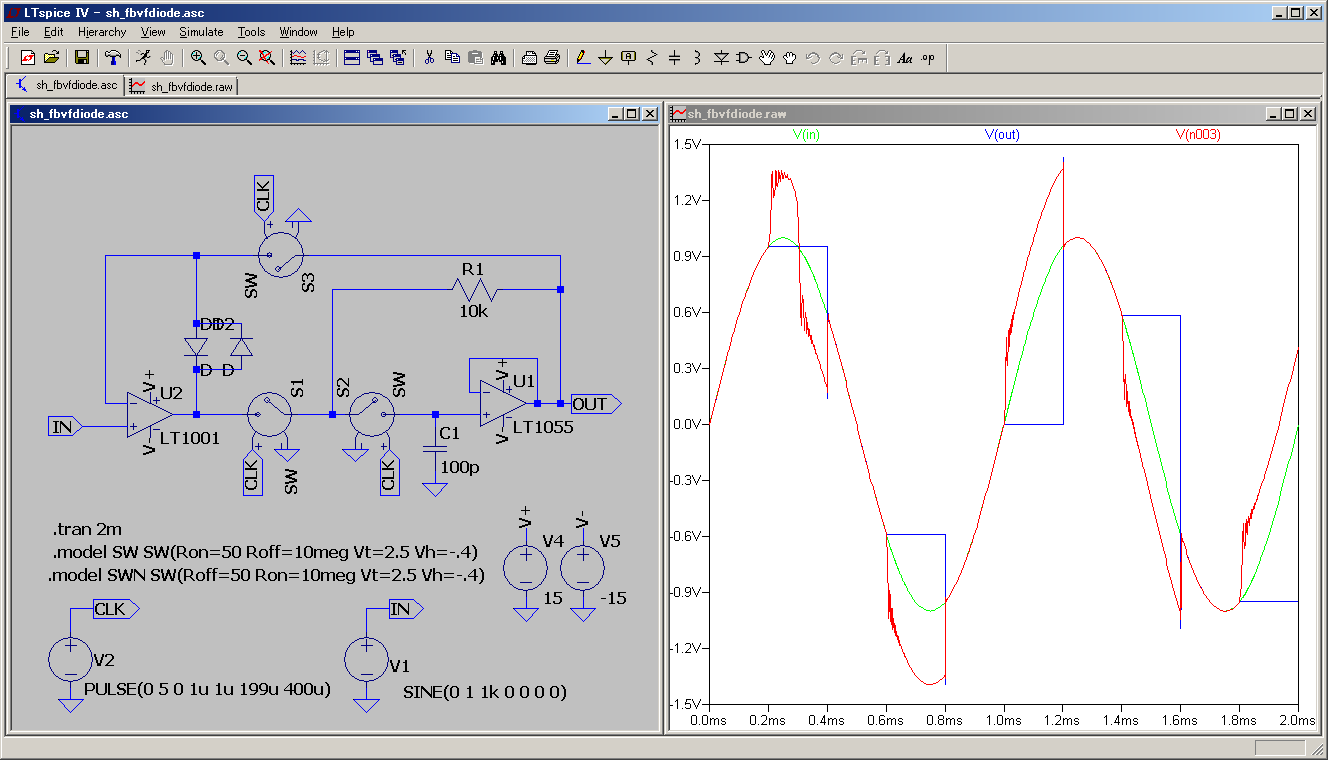
µ¢´Ô¥ë¡¼¥×¤Ë¥Û¡¼¥ë¥É²óÏ©¤òÆþ¤ì¤ë¤È¸íº¹¤¬¾¯¤Ê¤¯¤Ê¤ë¤¬¡¢½éÃʤòÁª¤Ð¤Ê¤¤¤ÈÍÆ°×¤Ëȯ¿¶¤¹¤ë¡£LF198(TO-99)/ LF398(SOIC/PDIP)/LF298(SOIC) ¤Î¤è¤¦¤Ê¥µ¥ó¥×¥ë¥Û¡¼¥ë¥ÉÍѤÎIC¤ò»È¤¦¤Î¤¬´Êñ¤À¤¬¡¢¤½¤¦¤Ç¤Ê¤¤¾ì¹ç¤Ï¿µ½Å¤ËÁªÄꤹ¤ë¡£ Îã¤Î²óÏ©¤Ç¤Ï¡¢½éÃʤΥª¥Ú¥¢¥ó¥×¤ËÈæ³ÓŪÄ㮤ÊLT1001¤ò¤ª¤¯¤Èȯ¿¶¤·¤Ê¤¤¤¬¡¢LT1055¤À¤Èȯ¿¶¤¹¤ë¡£LT1055¤Î¾ì¹ç¡¢¥²¥¤¥ó¤ò20dBÄøÅ٤ˤ¹¤ë¤È°ì±þÌÀ¤é¤«¤Êȯ¿¶¤Ï¤·¤Ê¤¤¡£
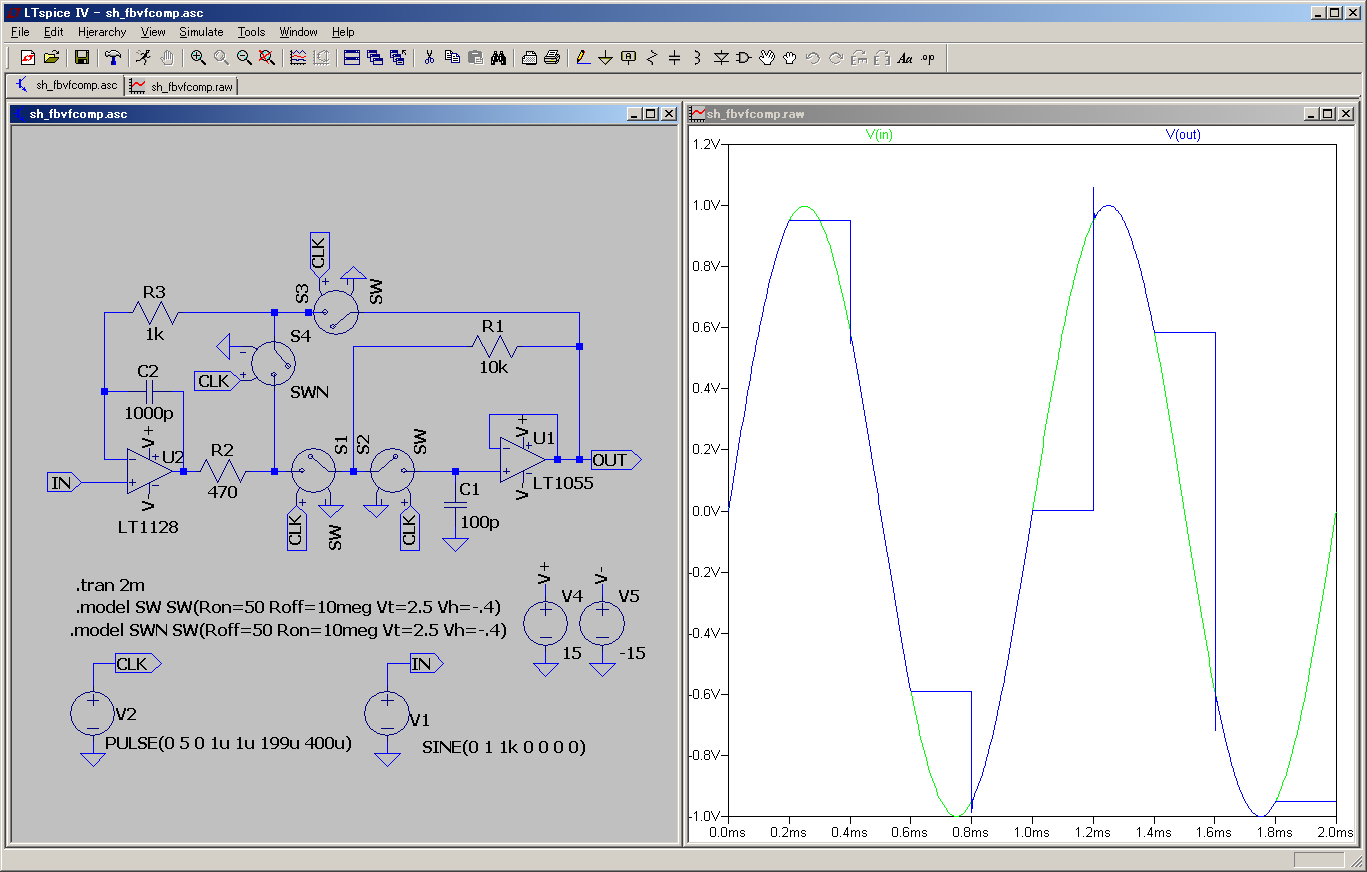
¥Û¡¼¥ë¥ÉÍѤΥ³¥ó¥Ç¥ó¥µ¤Ï¤«¤Ê¤ê¤ÎÍÆÎÌÉé²Ù¤Ë¤Ê¤ë¤Î¤Ç¡¢½éÃʤòLT1128¤ÎÍͤʹ⮥ª¥Ú¥¢¥ó¥×¤Ë¤¹¤ë¾ì¹ç¤Ï°ÌÁêÊä½þ¤¬É¬¿Ü¤Ë¤Ê¤ë¡£ Äñ¹³¤òÆþ¤ì¤Æ¥Û¡¼¥ë¥ÉÍѤΥ³¥ó¥Ç¥ó¥µ¤ÎÍÆÎÌÉé²Ù¤òÎ¥¤·¡¢Rf¤ÈÊÂÎó¤Ë°ÌÁêÊä½þ¥³¥ó¥Ç¥ó¥µ¤òÄɲä·¤¿¡£
¥Û¡¼¥ë¥É»þ¤Ë½éÃʤò¥Õ¥©¥í¡¼¤µ¤»¤ë¥¹¥¤¥Ã¥Á¤ÎÂå¤ï¤ê¤Ë¥À¥¤¥ª¡¼¥É¤ò»È¤¦¤³¤È¤â¤Ç¤¤ë¡£¥È¥ê¥¬¤Î¥¤¥ó¥Ð¡¼¥¿Åù¤ÎÉôÉÊÅÀ¿ô¤ò¸º¤é¤¹ÌÜŪ¤Ç¤Ï»È¤¨¤ë¤«¤â¤·¤ì¤Ê¤¤¤¬¡¢ Vf(0.6V)¤¬°Õ³°¤ËÂ礤¯¡¢¥Û¡¼¥ë¥É¤«¤é¥µ¥ó¥×¥ë¤Ø¤Î°Ü¹Ô»þ¤Î¥ª¡¼¥Ð¡¼¥·¥å¡¼¥È¤Ï¥¹¥¤¥Ã¥Á¤Ë¤è¤ë²óÏ©¤è¤êÂ礤¤¡£LF198/LF398¤ÎÆâÉô²óÏ©¤Ç¤â¥À¥¤¥ª¡¼¥É¤¬ºÎÍѤµ¤ì¤Æ¤ª¤ê¡¢ Vf¤ÏÄ̾ï¤Î¥À¥¤¥ª¡¼¥É¤è¤ê¾®¤µ¤¤¤«¤â¤·¤ì¤Ê¤¤¤¬¡¢ÆâÉô¤Î²óÏ©¤Î¿®¹æ¤ò·×¬¤¹¤ëÊýË¡¤¬¤Ê¤¤¡£IC¤Î²óÏ©¤ÈƱÍͤ˺î¤Ã¤Æ¤âɬ¤º¤·¤â¤¦¤Þ¤¯¹Ô¤¯¤ï¤±¤Ç¤Ï¤Ê¤¤¡£
LF198/LF298/LF398 Functional Block Diagram
Linear Technology LF198/LF298/LF398 Schematic Diagram
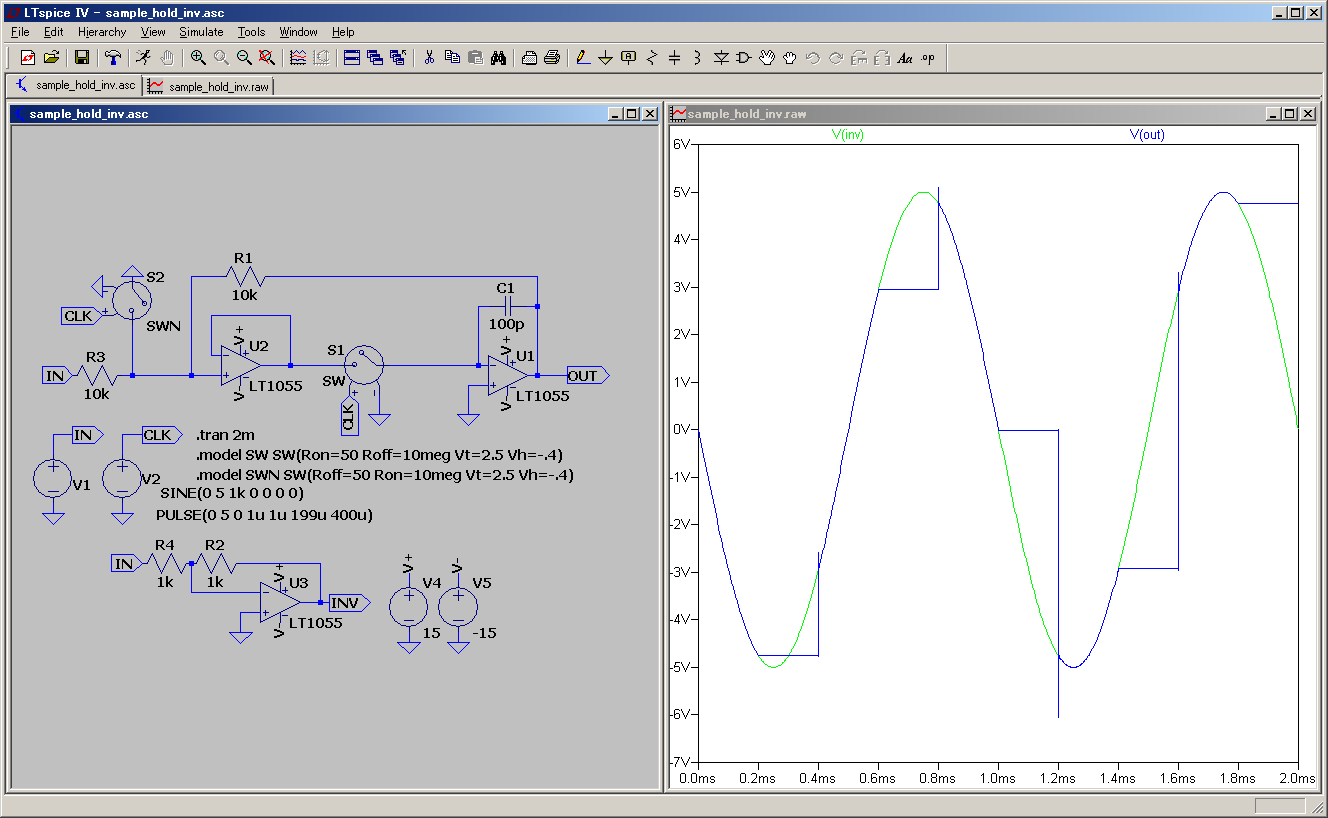
MT-090: Sample-and-Hold Amplifiers (Analog Devices)¤ÎFigure 18 Closed-loop SHA based on Inverting Integrator Switched at the Summing Point¤Ë ¥Ð¥Ã¥Õ¥¡¤òÄɲä·¤ÆÂ®ÅÙ¤ò²þÁ±¤·¤¿²óÏ©¡£²óÏ©Îã¤Ç¤Ï¥ª¡¼¥Ð¡¼¥·¥å¡¼¥È¤¬Â礤¯¡¢²þÁ±¤Î¤¿¤á¤Ï¡¢Rf¤ËŬµ¹¥³¥ó¥Ç¥ó¥µ¤òÄɲ乤ì¤ÐÎɤ¤¡£
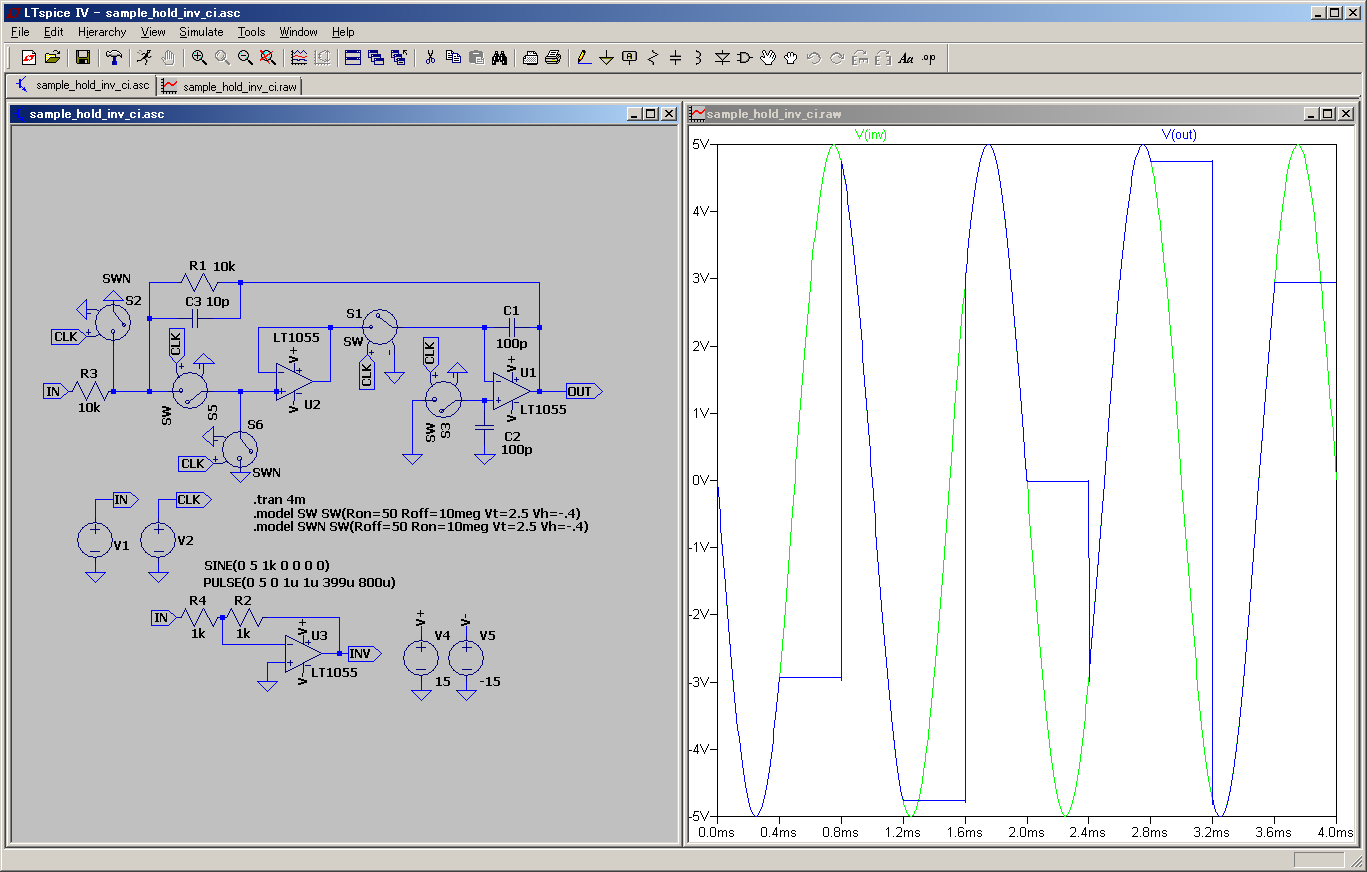
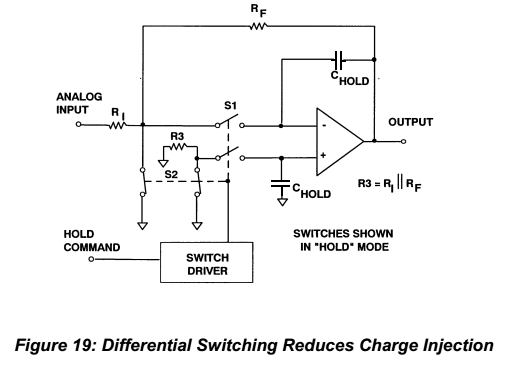
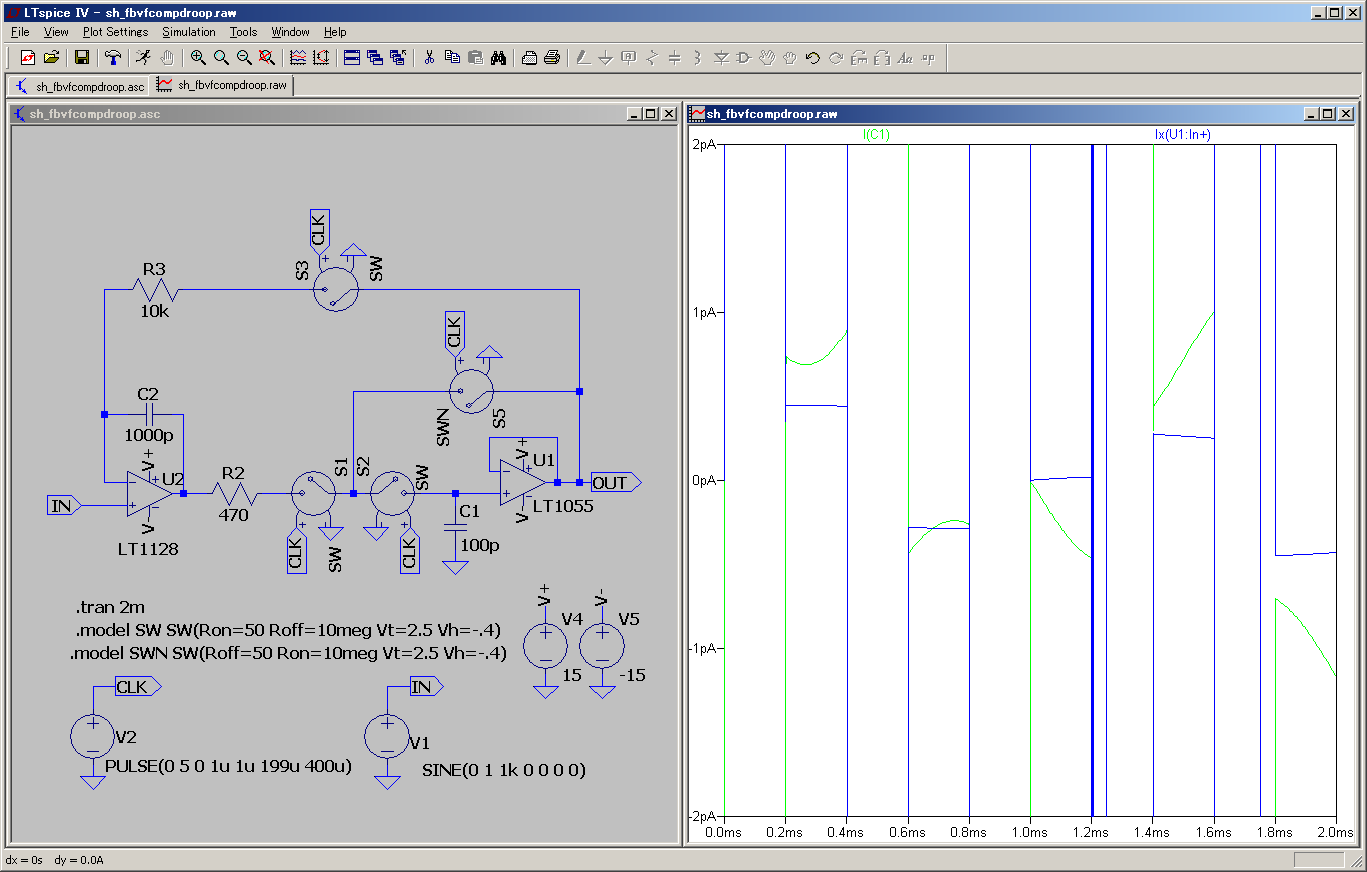
Rf¤Ë¥³¥ó¥Ç¥ó¥µ¤òÄɲä·¡¢¥ª¡¼¥Ð¡¼¥·¥å¡¼¥È¤ò²þÁ±¤µ¤»¤¿Â¾¡¢ Charge injectionÊäÀµ¤Î¤¿¤á¤Î¥¹¥¤¥Ã¥Á¤È¡¢¥Ü¥ë¥Æ¡¼¥¸¥Õ¥©¥í¥ïξ¦¤Ë¥¹¥¤¥Ã¥Á¤òÄɲä·¤ÆÀºÅÙ¤ò¹â¤á¤¿²óÏ©¡£MT-090¤Î¥ª¥ê¥¸¥Ê¥ë¤Î²óÏ©¤Ç¤Ï¡¢Rf¤ÈRs¤ÎÊÂÎóÄñ¹³¤ò¤Ä¤Ê¤°¤³¤È¤Ë¤Ê¤Ã¤Æ¤¤¤ë¤¬¡¢ ¥Ü¥ë¥Æ¡¼¥¸¥Õ¥©¥í¥ï¸å¤Î¥¹¥¤¥Ã¥Á¤Ê¤Î¤Ç¥¤¥ó¥Ô¡¼¥À¥ó¥¹¤ÏÄ㤯¡¢¤³¤³¤Ç¤ÏÊØµ¹Åª¤ËGND¤ËľÀܤĤʤ¤¤Ç¤¤¤ë¡£¥Ü¥ë¥Æ¡¼¥¸¥Õ¥©¥í¥ï¤Î¥ª¥Ú¥¢¥ó¥×¤Î¥ª¥Õ¥»¥Ã¥È¤¬Â礤¤¾ì¹ç¤ÏÌäÂê¤Ë¤Ê¤ë¤³¤È¤â¤¢¤ë¤Î¤ÇÉʼï¤Ë¤è¤ê¹Íθ¤¹¤ë¤Ù¤¤À¤í¤¦¡£
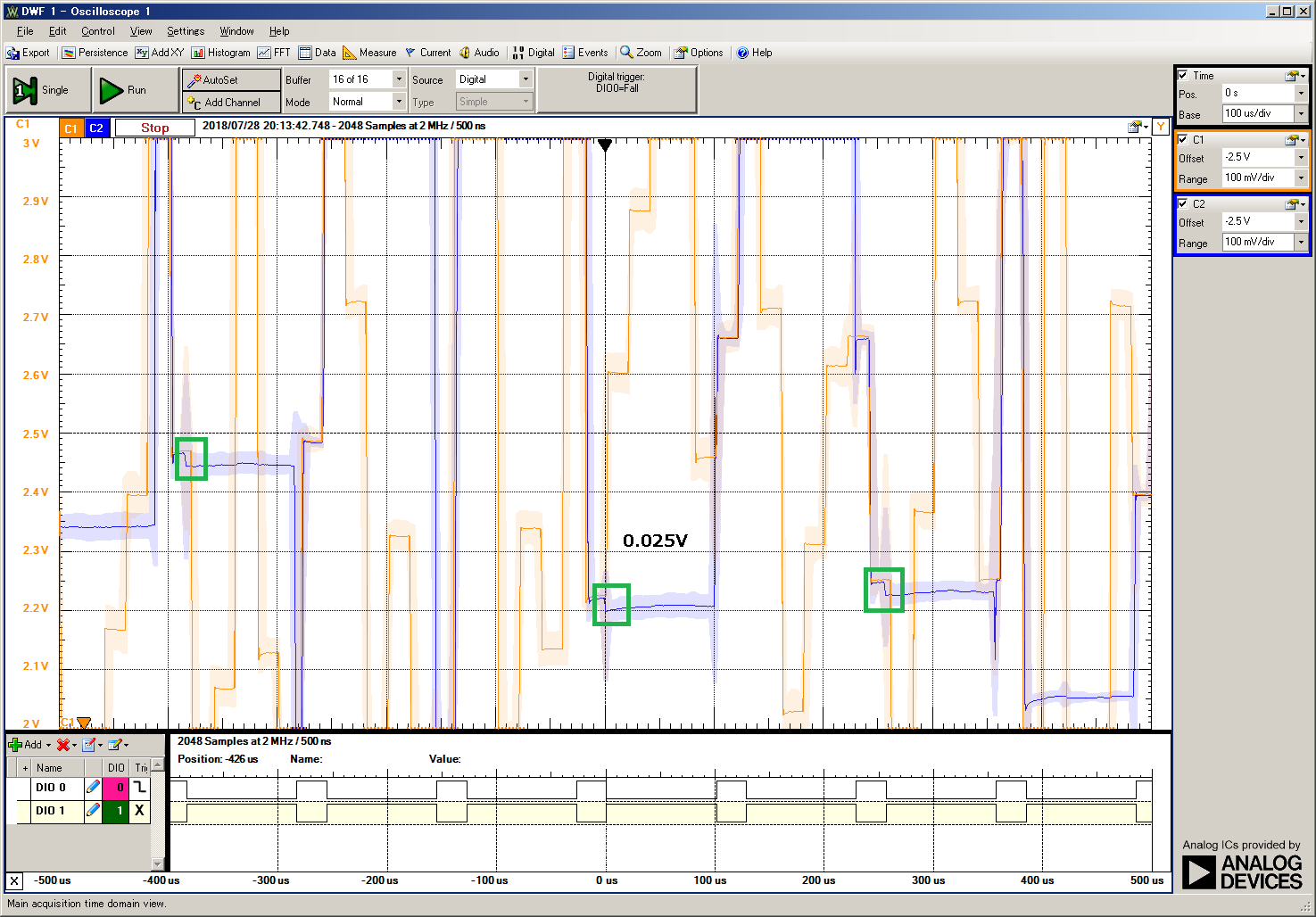
¥¹¥¤¥Ã¥Á¤ÏʪÍýŪ¤Ê¤â¤Î¤Ç¤Ê¤¯MOSFET¤Ë¤è¤ë¤â¤Î¤Ê¤Î¤Ç¡¢¥²¡¼¥È¤«¤éÅŲ٤¬¥Û¡¼¥ë¥É¥³¥ó¥Ç¥ó¥µ¤ËήÆþ¤·¥ª¥Õ¥»¥Ã¥È¸íº¹¤¬À¸¤¸¤ë¡£ ÁÐÊý¸þ¤Î¥¹¥¤¥Ã¥Á¤Î¾ì¹ç¤Ïɬ¤º¤·¤âÀµ¤Î¥ª¥Õ¥»¥Ã¥È¤¬À¸¤¸¤ë¤ï¤±¤Ç¤Ï¤Ê¤¤¡£TS12A4514/TS12A4515¤Î¥Ç¡¼¥¿¥·¡¼¥È¤Ç¤ÏCharge injection¤Ë¤è¤ëÅ۵¸íº¹¤ÏÉéÊý¸þ¤Ë¤Ê¤Ã¤Æ¤¤¤ë¡£
¿¤¯¤Î¥á¡¼¥«¤Î74HC4066¤Î¥Ç¡¼¥¿¥·¡¼¥È¤Ë¤Ïcharge injection¤ÎµºÜ¤Ï¤Ê¤¤¤¬¡¢TI¤Î»²¹Íʸ¸¥(SZZA030)¤Ë·×¬Ãͤ¬·ÇºÜ¤µ¤ì¤Æ¤ª¤ê¡¢ ¤³¤ì¤«¤é·×»»¤¹¤ë¤È6pC/100pF=0.06V¤Ç¡¢¼Â¬Ãͤϡ¢·×»»Ãͤè¤ê¡¢¤ä¤äÄ㤤ÃͤȤʤäƤ¤¤ë¡£
¥Û¡¼¥ë¥É¥³¥ó¥Ç¥ó¥µ¤«¤éÅŲ٤¬Î®½Ð¤·¥Û¡¼¥ë¥ÉÅ۵¤¬ÊѤï¤Ã¤Æ¤·¤Þ¤¦¤Î¤ò¶ËÎÏÈò¤±¤ë¤¿¤á¡¢¥¹¥¤¥Ã¥Á¤ò¥Û¡¼¥ë¥ÉÅ۵¤ÇÊÝ»ý¤·¤¿¤ê¿§¡¹¤ÊÊýË¡¤¬¤¢¤ë¡£ ¥Û¡¼¥ë¥É¥³¥ó¥Ç¥ó¥µ¤¬¥ª¥Ú¥¢¥ó¥×¤Îü»ÒÆâ¤ËÆþ¤Ã¤Æ¤¤¤ëȿžÁýÉý¤Î¥¿¥¤¥×¤ÎÊý¤¬Èæ³ÓŪÍÍø¤Ë¤Ê¤ë¤È»×¤ï¤ì¤ë¡£ ÈóȿžÁýÉý¤Î¥¿¥¤¥×¤Ç¤Ï¡¢¥¹¥¤¥Ã¥Á¤ò¥Û¡¼¥ë¥ÉÅ۵¤Ç¥É¥é¥¤¥Ö¤·¤Æ¤â¡¢ÆþÎϦ¤«¤é¤Î¿®¹æ¤ò´°Á´¤Ë¤Ï¼×ÃǤǤ¤Æ¤¤¤Ê¤¤¡£
ȿžÁýÉý¤ÎÊý¤Ï¥¹¥¤¥Ã¥Á¤¬£µ¤ÄɬÍפǾ¯¤·ÌÌÅݤʤΤǡ¢¤Þ¤º»î¤·¤ËÈóȿžÁýÉý¤ÎÊý¤ò¥Û¡¼¥ë¥ÉÃÊAD8655¡¢MAX412¡¢74HC4066¡¢¥Û¡¼¥ë¥É470pF¡¢°ÌÁêÊä½þ1500pF¤ÇÁȤó¤Ç¤ß¤ë¤È¡¢¥Û¡¼¥ë¥É»þ¤Î¿®¹æ¤Îϳ¤ì¤¬·ë¹½¤¢¤ë¤³¤È¤Ëµ¤¤Å¤¯¡£
º£²ó»ÈÍѤ·¤¿ÆüΩ¤ÎHD74HC4066¤Î¥Ç¡¼¥¿¥·¡¼¥È¾å¤ÎFeedthrough¤Ï-50dB¤Ç¡¢TI¤Î»²¹Íʸ¸¥(SZZA030)¤Ç¤ÏÎà»÷Éʼï¤ÎSN74HC4066¤ÎFeedthrough¤Ï-42dBÄøÅ٤Ǥ¢¤ê¡¢¾åµ¤ª¤ª¤Þ¤«¤Ê¼Â¬Ãͤ¬Ìó2/500=-48dB¤Ê¤Î¤Ç¡¢ÍýÏÀÃͤ˶ᤤ¡£ °ìÈÌŪ¤ÊCMOS¥Ç¥£¥¹¥¯¥ê¡¼¥È¤ÎÀǽ¤Ï¤½¤ì¤Û¤ÉÎɤ¤Ìõ¤Ç¤Ï¤Ê¤¯¡¢¶µ²Ê½ñŪ¤Ê²óÏ©¤Î¤Þ¤Þ¡¢¼ÂÍѤˤʤ륵¥ó¥×¥ë¥Û¡¼¥ë¥É²óÏ©¤òÁȤà¤Î¤Ï°Õ³°¤ËÆñ¤·¤¤¡£²óϩŪ¤Ë¤Ï¥¹¥¤¥Ã¥Á¿ô¤¬Â¿¤¤¤¬¡¢È¿Å¾ÁýÉý¤Î¥¿¥¤¥×¤¬¤ª¤½¤é¤¯Îɤ¤Àǽ¤ò½Ð¤·¤ä¤¹¤¤¤È»×¤ï¤ì¤ë¡£ TI¤ÎÀ½ÉʤǸÀ¤¨¤Ð¡¢ÂбþÅ۵¤¬¤ä¤ä¹¤¤(0-10V)CD74HC4066¤ÎÊý¤Ï¡¢SN74HC4066(2-6V)¤ËÈæ¤Ù¤ÆFeedthrough¤¬¤ä¤äÎɤ¤Àǽ(-72dB)¤Ç¤¢¤ê¡¢ÉôÉʤÎÊѹ¹¤À¤±¤Ç¤è¤êÎɤ¤²óÏ©Àǽ¤ò½Ð¤»¤ë²ÄǽÀ¤¬¤¢¤ë¡£ 74HC4066·Ï¤Î¥¢¥Ê¥í¥°¥¹¥¤¥Ã¥Á¤¬Í¾¤ê»È¤ï¤ì¤º¡¢¿·¤·¤¤¥¢¥Ê¥í¥°¥¹¥¤¥Ã¥ÁÀ½ÉÊ·²¤¬³«È¯¤µ¤ì¤Æ¤¤¤¯¤Î¤Ï¡¢¤³¤ì¤é¤Î¸Å¤¤À½ÉÊ·²¤ÏÍÑÅÓ¤ËÂФ·ÉÔ½½Ê¬¤ÊÀǽ¤·¤«»ý¤¿¤Ê¤¤¤³¤È¤âÍýͳ¤Î°ì¤Ä¤Ë¤¢¤ë¤À¤í¤¦¡£ LF398¤ÎFeedthrough¤Ï90dBÄøÅÙ(1kHz)¤Ç¡¢Ä̾ï¤ÎÍÑÅӤȤ·¤Æ¤Ï¤Þ¤º¤³¤Á¤é¤Î»ÈÍѤò¹Í¤¨¤¿¤¯¤Ê¤ë¤È¤³¤í¤Ç¤¢¤ë¤¬¡¢Ã±ÅŸ»¡¦ÄãÅ۵¤Ç¤Î»ÈÍÑ¤ÏÆñ¤·¤¤¡£
LF398¤ÏÀµÉéÅŸ»¤¬É¬ÍפʤΤǡ¢Ã±ÅŸ»¤Î¾ì¹ç¤ÏR2R¥ª¥Ú¥¢¥ó¥×¤ò»ÈÍѤ·¤Æ²óÏ©¤òÁȤàɬÍפ¬¤¢¤ë¡£ÆþÎÏ¥ª¥Õ¥»¥Ã¥ÈÅÅή(input offset current)¤¬pA¥ª¡¼¥À¤ÎFETÆþÎϤޤ¿¤ÏCMOS¤ÎR2R¥ª¥Ú¥¢¥ó¥×¤ÏÈæ³ÓŪÉʼ郎¸Â¤é¤ì¤Æ¤¤¤ë¡£
ÆþÎÏ¥ª¥Õ¥»¥Ã¥ÈÅÅή¤¬Â礤ʾì¹ç¤Ï¡¢¥Û¡¼¥ë¥É¥³¥ó¥Ç¥ó¥µ¤ÎÅŲ٤òÊÝ»ý¤¹¤ë¤³¤È¤¬¤Ç¤¤º¡¢¥Û¡¼¥ë¥É»þ¤ËÅ۵¤¬Äã²¼¤¹¤ë¡£
²¼µÎã¤Ç¤Ï¡¢2.31V-0.83V/3.03ms=488V/s¤ÇDroop¤¬¸«¤é¤ì¤Æ¤¤¤ë¤¬¡¢¤³¤Î²óÏ©¤Î¥Û¡¼¥ë¥ÉÃʤÎR2R¥ª¥Ú¥¢¥ó¥×NJM2734¤ÎÆþÎϥХ¤¥¢¥¹ÅÅή¤Ï50nA¤¢¤ê¡¢
·×»»¾åI/C=50nA/100pF=50000pA/100pF=500V/s¤È¤Ê¤ë¤Î¤ÇÍýÏÀÃͤ˶ᤤ¤¬¡¢¤³¤Î¤è¤¦¤ÊÉʼï¤ÎÁªÄê¤Ï˾¤Þ¤·¤¯¤Ê¤¤¡£
ÆþÎϥХ¤¥¢¥¹ÅÅή¤¬¾¯¤Ê¤¤CMOS¥ª¥Ú¥¢¥ó¥×¤Ç¤â¡¢Å¬ÀÚ¤ÊÉʼï¤òÁªÄꤷ¤Ê¤¤¤È¥µ¥ó¥×¥ë¤¬¤¦¤Þ¤¯¤¤¤«¤Ê¤¤¡£NJU7096¤Ï½ÐÎÏÅÅή¤Ïsink¤Ï6mA¤Þ¤Ç²Äǽ¤À¤¬source¤¬ºÇÂç¤Ç¤â200uAÄøÅÙ¤·¤«¤Ê¤¯¡¢ Éé²ÙÄñ¹³ÆÃÀ¤âÎɤ¯¤Ê¤¤¤Î¤Ç¡¢¥¹¥ë¡¼¥ì¡¼¥È¤¬ÌäÂê¤Ç¤Ê¤¯¤Æ¤â¥Û¡¼¥ë¥É¥³¥ó¥Ç¥ó¥µ¤Î½¼ÅÅ»þ´Ö¤ËÌäÂ꤬À¸¤¸¤ë¡£ ¥³¥ó¥Ç¥ó¥µÍÆÎÌ¡¢½¼ÅÅ»þ´Ö¤ÈÅ۵º¹¤«¤é½¼ÅÅÅÅή¤ò»»½Ð¤¹¤ë¤È¡¢1500pF*(1.93V-1.25V)/(12.95ms-10.05ms)=0.4uA¤È¤Ê¤ê¡¢¤«¤Ê¤ê½ÐÎϤ¬À©¸Â¤µ¤ì¤Æ¤¤¤ë¤³¤È¤¬Ê¬¤«¤ë¡£ ¤Á¤Ê¤ß¤Ë¡¢°ÌÁêÊä½þ¤·¤Æ¤¤¤Ê¤¤¤Î¤Ç¡¢¥µ¥ó¥×¥ë»þ¤Ëȯ¿¶¤·¤Æ¤¤¤ë¡£
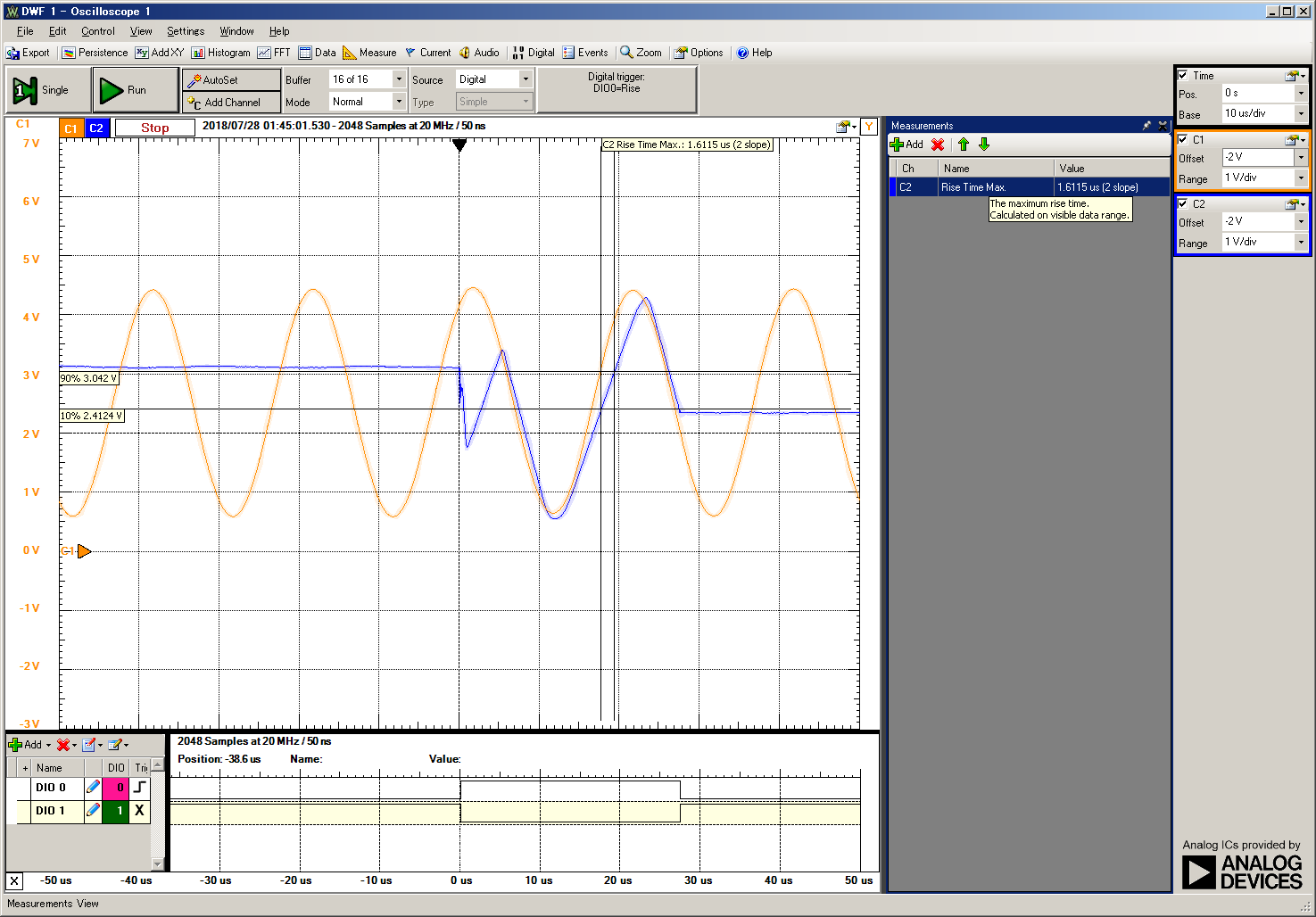
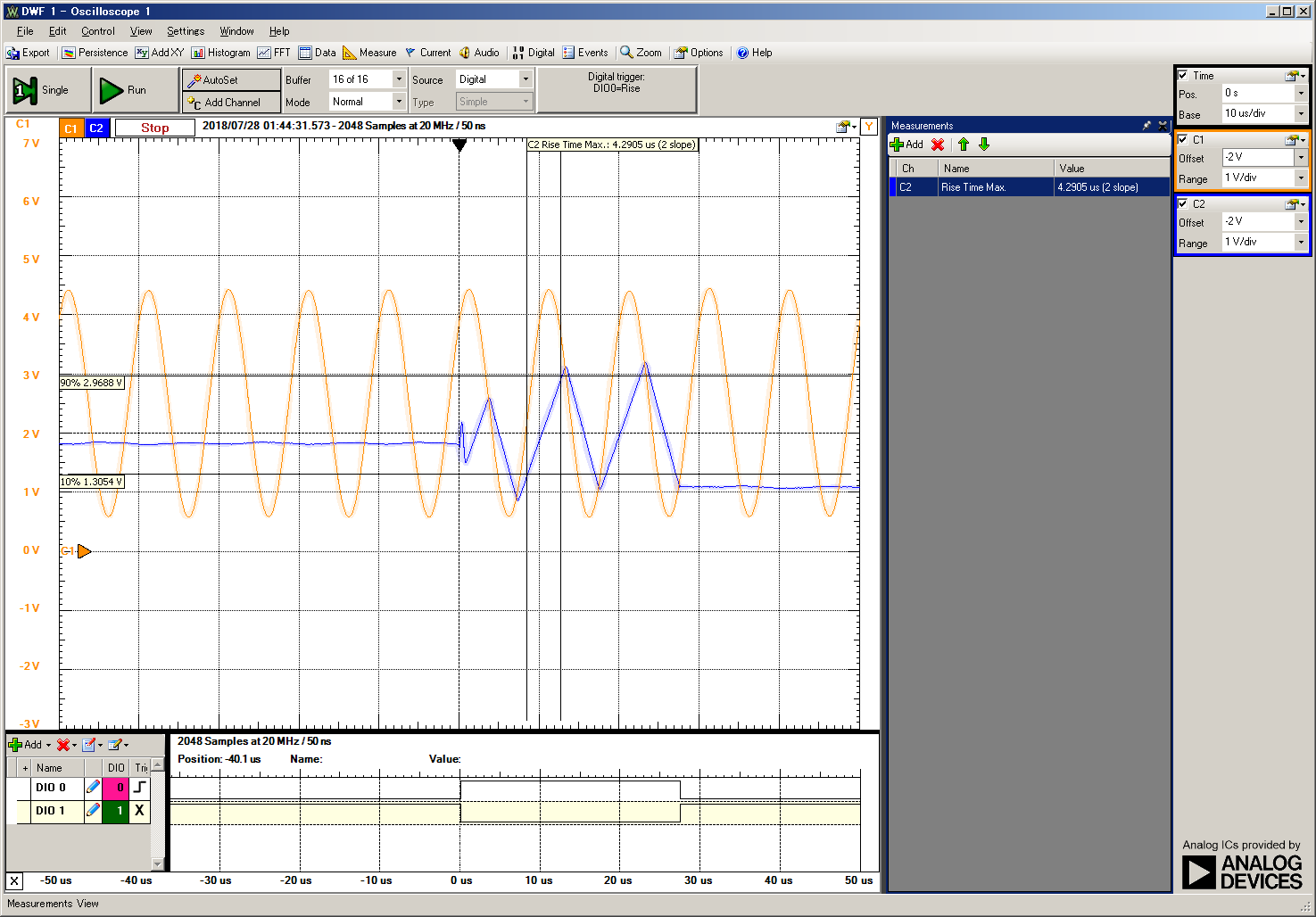
FETÆþÎϤÇR2R¤Î¥ª¥Ú¥¢¥ó¥×¤ÏCMOS¤¬Â¿¤¤¤¬¡¢Äã¾ÃÈñÅÅÎϤΤ¿¤á¤Ë¥¹¥ë¡¼¥ì¡¼¥È¤¬Ä㤤Éʼï¤Ç¤Ï¡¢¹â¼þÇȤο®¹æ¤Ë¤ÏÄɿ路¤Ê¤¤¤Î¤Ç¡¢¤³¤ÎÅÀ¤âÃí°Õ¤¬É¬ÍפǤ¢¤ë¡£NJM2734¤Ç¤â0.4V/us¤·¤«¤Ê¤¤¤Î¤Ç¡¢ 5V¥Õ¥ë¤Ë¿¶¤é¤»¤Æ0.4V/us/(2*pi*5V)=12.7kHz¤Ç¡¢²»À¼ÂÓ°è¤Ë¤ÏÉÔ¤Ǥ¢¤ë¡£¤Þ¤¿¡¢¥Û¡¼¥ë¥É¤«¤é¥µ¥ó¥×¥ë¤Î°Ü¹Ô»þ¤Î»þ´Ö¤â¤«¤Ê¤ê¤«¤«¤ë¤³¤È¤Ë¤Ê¤ë¡£
20kHz¤À¤È¤Ê¤ó¤È¤«Äɤ¨¤Æ¤¤¤ë¡£
50kHz¤À¤È¤«¤Ê¤êÇÈ·Á¤¬»°³ÑÇȤˤʤäƤ¤¤ë¡£
100kHz¤À¤ÈÁ´¤¯ÄÉ¿ï¤Ç¤¤Ê¤¤¡£
Applications of Monolithic Sample-and-Hold Amplifiers APPLICATION NOTE AN517 - intersil (Renesas)
SBAA045 High Speed Data Conversion - Burr-Brown Texas Instruments
JAJA206 ¹â®¥Ç¡¼¥¿ÊÑ´¹ - Texas Instruments
TIDU022 - Sample and Hold Glitch Reduction for Precision Outputs Reference Design - Texas Instruments
Application Note 775 - Specifications and Architectures of Sample-and-Hold Amplifiers - Texas Instruments
MT-090 - Sample-and-Hold Amplifiers - Analog Devices
AN-257 - Careful Design Tames High Speed Op Amps - Analog Devices
<rindolf> Pythack now was able to get the fc-solve test suite up and
running.
<Zuu> eh?!
* Zuu solves rindolf
<rindolf> Zuu: http://fc-solve.berlios.de/
<rindolf> Zuu: I am not solvable.
<rindolf> I am Turing hard.
<Zuu> :S
* Zuu never heard of anything called 'turing hard'
<joeyadams> lol. Zuu's probabilistic, so maybe he can solve you.
<Zuu> but i guess i have now
<joeyadams> Formal definition of Turing hard: blah blah blah hard blah
blah Turing blah.
<Zuu> Hahahaha :D
<joeyadams> Wikipedia: Given a set X in P(N), a set A in N is called
Turing hard for X if X <=_T A for all X in X. If
additionally A is in X, then A is called Turing complete for
X.
<joeyadams> Does that clarify?
<joeyadams> (see http://en.wikipedia.org/wiki/Turing_reduction for the
actual math symbols)
* joeyadams assumes you get the point
<Zuu> yeah, i think i'll have to put significant time into that,
for me to comprehend it :)
<Zuu> but maybe i will, some day :P
<joeyadams> My point is that people like to use mumbo jumbo to describe
more concise mumbo jumbo.
<joeyadams> E.g. A problem is NP-hard if it is at least as hard as all
the problems in NP.
<Zuu> i undersstand enough of it, to be fairly confident that
rindolf being turing hard, will not say much about his
ability to be solved
<joeyadams> I'm guessing Turing-hard means you can't solve a problem
with a Turing machine (e.g. the halting problem)
<joeyadams> (substitute Turing machine with "your computer" :) )
<Zuu> no, turing hard has something to do with expressiveness
<joeyadams> okay, Zuu > joeyadams, so I can't help you :)
* Zuu tickles joeyadams ^^
<joeyadams> A delicious apple is any fruit ∈ apple that is at least as
tasty as any other fruit ∈ apple.
<joeyadams> In other words, apples are in the set of recursively
nommable fruits.
<rindolf> joeyadams: what's up?
<joeyadams> I'm babbling.
<rindolf> joeyadams: Apple is one of my least favourite fruits.
* Zuu watches a number of apples that recursively NOM's
eathother
<rindolf> It tends to be too commonplace.
<rindolf> Or simpleton.
<joeyadams> whoops, my logic is incorrect
<joeyadams> Only delicious apples are ∈ the nommable fruits.
<joeyadams> (recursively is just a word you throw in to sound smart)
* Zuu NOMs joeyadams :>
<rindolf> joeyadams: a friend of one of my sisters said that Apple is
his favourite fruit.
<rindolf> Ta-zuu!
* joeyadams has quit (Read error: 104 (Connection nommed by
peer))
<Zuu> yeah, unfortunately a lot of people throw with a lot of
words to sound smart :/
<Zuu> my favourite fruit is a recursive banana!
<joeyadams> although it certainly helps to use complex terminology to
solve complex problems. As Aristophanes said, "High thoughts
must have high language."
<Zuu> .. along with immutable polymorphic pears
<joeyadams> Zuu> I guess you have to peel it indefinitely?
<joeyadams> lol
<Zuu> Hahah, yeah :P
<joeyadams> I tend to eat bananas in deterministic polynomial time.
<Zuu> i eat them in linear time, but uses exponential space
<joeyadams> lol
<rindolf> Heh.
<joeyadams> eww
-- Turing Hard
-- ##programming, Freenode
You will be the last person to buy a Chrysler.